
Training

Shingijutsu
Training

Since 1987, we have accumulated a wealth of expertise in continuous improvement, drawing from decades of hands-on experience and practical success. This rich body of knowledge has been incorporated into a wide range of training programs, which have been offered not only to the manufacturing sector but also to various other industries such as logistics, healthcare, and services. By applying our methods across different fields, we have supported organizations in enhancing operational efficiency, fostering a culture of problem-solving, and achieving sustainable growth.

Industries
We Have Supported
Transportation Equipment Manufacturers
  • Automotive
    (including
    components)
  • Aerospace
    (including parts and
    engines)
  • Shipbuilding
  • Elevators
Machinery and Equipment Manufacturers
  • Measurement
    instruments
  • HVAC systems
  • Casting and
    foundry
  • Motor and
    Transformer
Food and Consumer Goods Manufacturers
  • Food products
  • Home
    appliances
  • Furniture
  • Apparel
Other Sectors
  • Pharmaceuticals
  • Healthcare
    institutions
  • Insurance
  • Finance

Practical
Kaizen Training

A Five-Day Hands-On Program to Acquire Kaizen Techniques

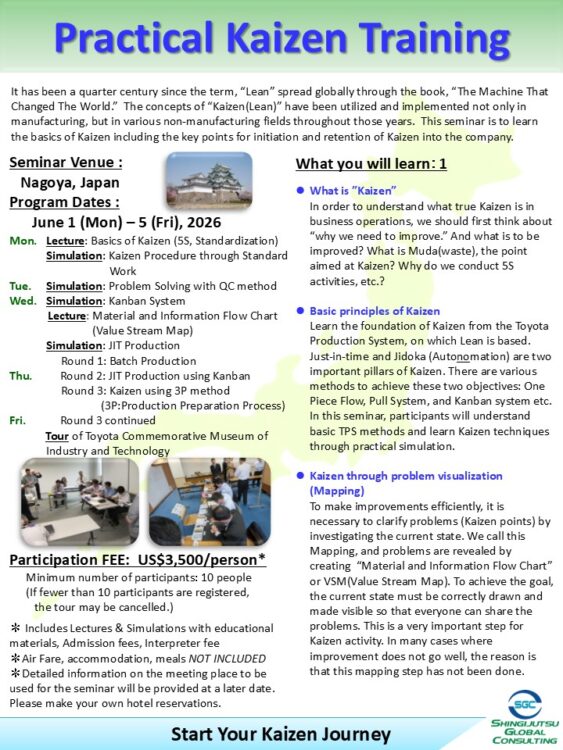
Shingijutsu Global Consulting regularly offers Practical Kaizen Training—a five-day immersive program designed to help participants learn Kaizen, the philosophy and practice of continuous improvement at the heart of the Toyota Production System (TPS).

This training goes beyond theory. Through realistic simulations, participants experience TPS core methods include 5S, Standard Work, Problem Solving based on QC Story, Kanban System, Just-in-Time production, and 3P (Production Preparation Process)—building practical skills that drive real improvement.

The program provides actionable tools that can be applied immediately on-site. It’s ideal for Kaizen leaders, executives, and anyone seeking to deepen their understanding of Kaizen. As a first step toward embedding a Kaizen culture and accelerating organizational growth, this training delivers lasting impact.

This program is for you
if you want to:

Learn Kaizen through
the Toyota
Production System

Drive Kaizen
initiatives within
your organization

Understand
how to implement
Kaizen directly on-site

Training Overview

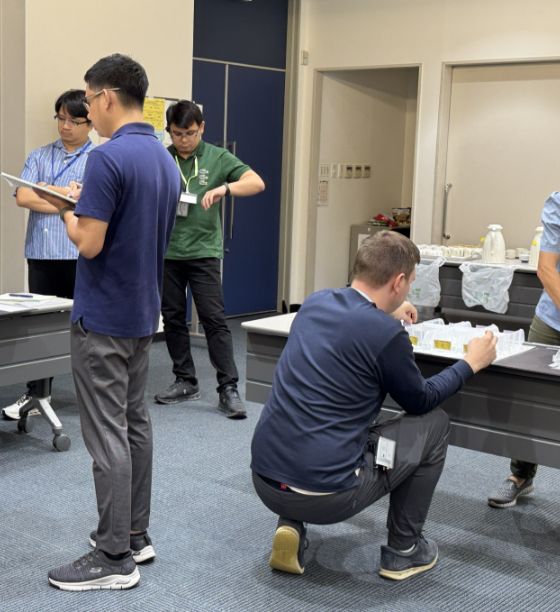
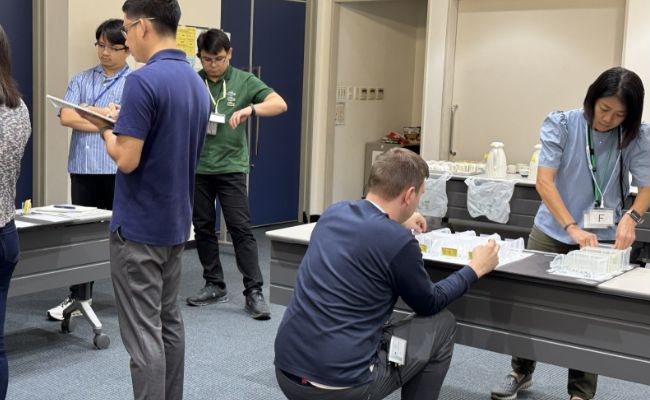
Practical Kaizen Training emphasizes hands-on learning, where participants actively engage both mind and body to experience Kaizen firsthand. Over the course of five days, the program guides participants from foundational Kaizen principles to concrete implementation methods.

Deepening Your Understanding of Kaizen
Why does your workplace need Kaizen?
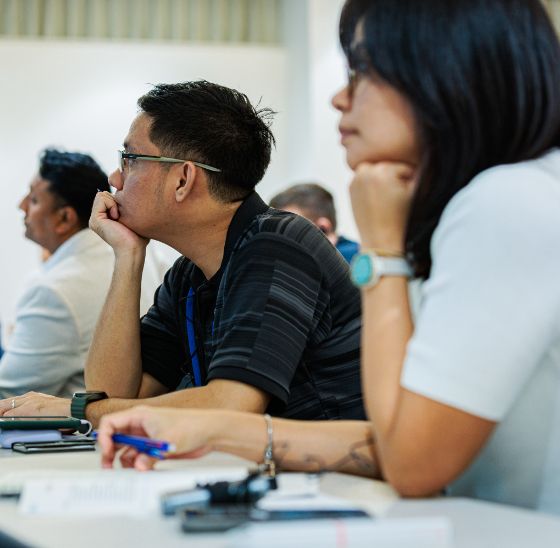
Kaizen without clear purpose—adopted as a formality—has little value. The first step is to define the objective. Through thoughtful inquiry into questions such as “What should be improved on-site?”, “What is Muda (waste)?”, and “Why do we practice 5S?”, participants explore the essence of Kaizen and develop a mindset rooted in purpose.
01

Learning Jidoka, JKK and Just-in-Time

Two core concepts are essential to effective Kaizen.
The first is Jidoka (Autonomation), particularly its human-centered application known as JKK (built-in quality with ownership)—the idea that each process must ensure quality and prevent defects from passing downstream.
The second is Just-in-Time—producing only what is needed, when it is needed, in the exact amount needed.
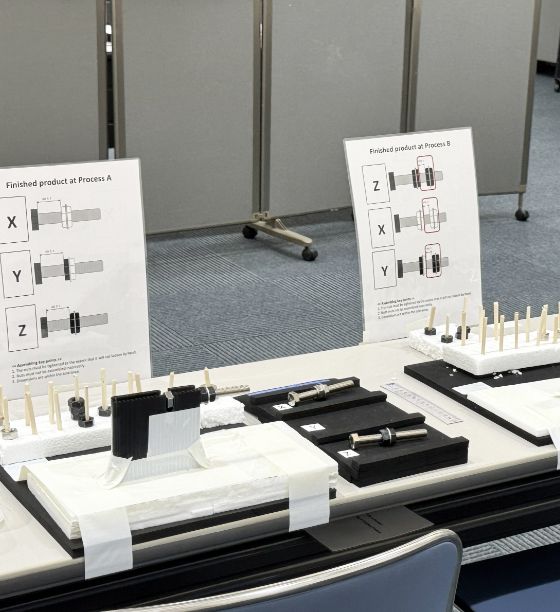
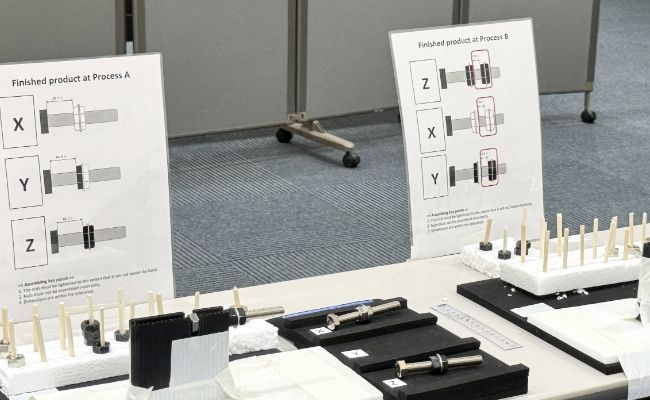
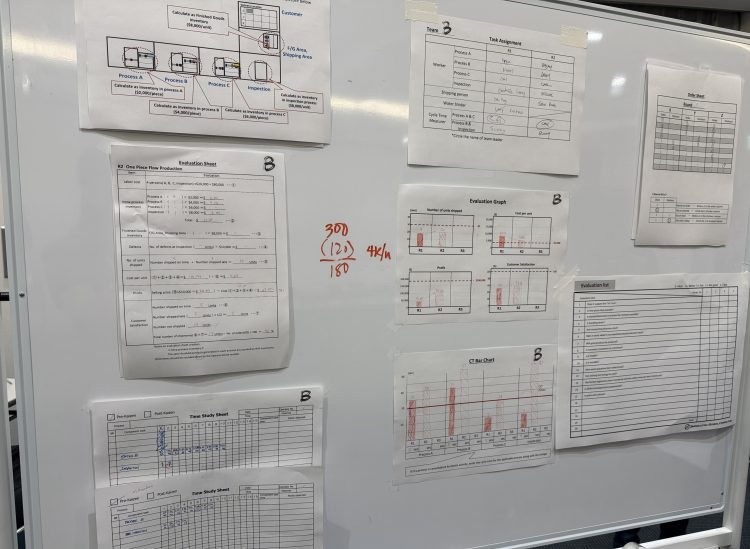
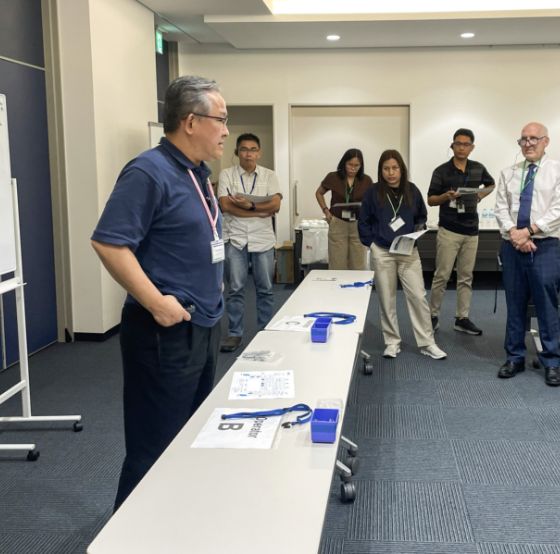
Through simulation-based training, participants experience both principles in action, learning how to reduce lead time across the entire production flow—from materials to finished goods—while simultaneously improving product quality.

02

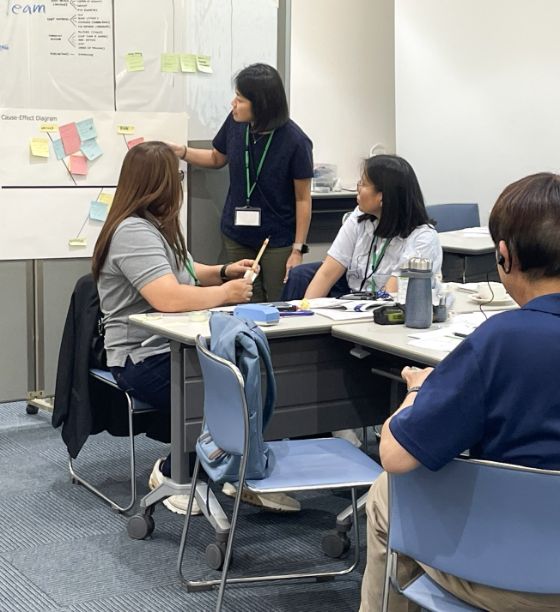
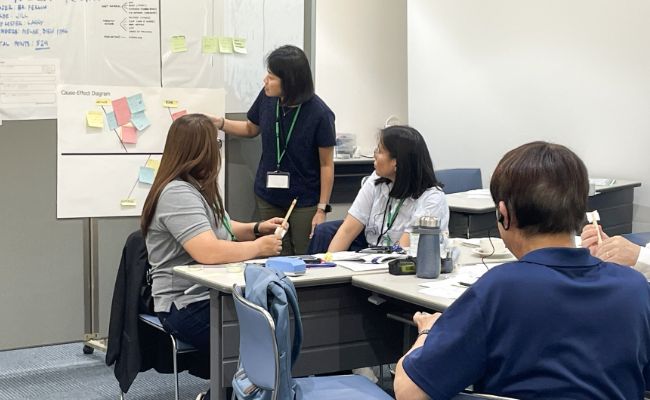
Learning Problem Solving Through the QC Story Approach

The QC Story is a systematic approach to solving problems. Participants learn each step—from theme selection and current-state analysis to root cause investigation, countermeasure planning, implementation and effect verification, and finally standardization and horizontal deployment.
Through a dart game simulation, the training fosters logical thinking and data-driven decision-making, enhancing participants’ ability to tackle real-world challenges directly on-site.

03

Understanding the Kanban System

The Kanban system is a core mechanism for realizing Just-in-Time production. It uses visual signals (Kanban cards) to communicate part and task instructions, enabling production of only what is needed, when it is needed, in the exact amounts needed.
Through simulation, participants gain a practical understanding of how the Kanban system functions and how to operate it effectively—developing skills to reduce inventory, surface hidden issues, and improve both productivity and flexibility

04

Visualizing Problems Through Mapping

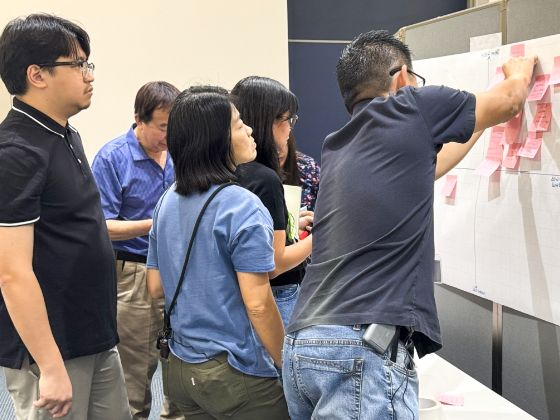
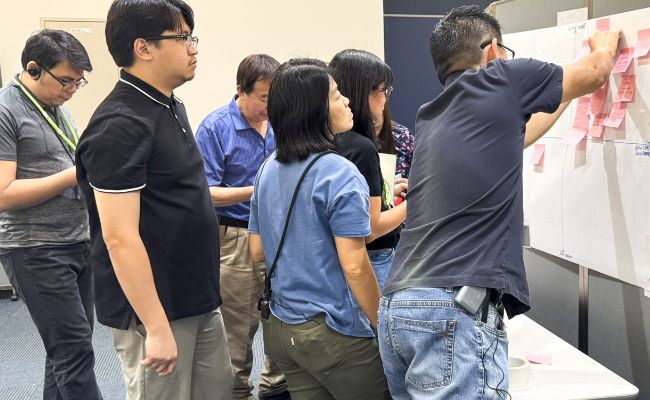
Efficient Kaizen begins with clear problem identification. In this training, participants use Value Stream Mapping to visualize issues across the process and build the capability to share challenges transparently with all team members.

05

3P (Production Preparation Process)

To increase profitability, organizations must produce high-quality Products in highly productive Plants under well-managed Processes. This requires robust Production Preparation Process—whether launching a new product, starting up a new facility, shifting to a new line due to workload changes, or modifying equipment.
Through simulation, participants learn the Production Preparation Process and develop practical skills they can apply directly on-site.

06

Private Training
Available

In addition to our standard programs, we offer customized training designed to meet the specific needs of your workplace. Lectures and hands-on exercises are tailored to address your unique challenges, ensuring relevance and practical value. We’d be happy to meet with you to discuss your goals and propose a training plan that fits.

Example of Training Programs
We Have
Conducted Include:

Gemba Kaizen

The first step in developing Kaizen leaders is to internalize the fundamental concepts of Kaizen.
This training combines classroom lectures with on-site (Gemba) exercises, ensuring that participation itself becomes a meaningful step toward Kaizen.
Participants learn essential elements of Kaizen, including the core concept of Just-in-Time and the use of Standard Work to support Takt Time production.

Key
Learning
Points
  • Understand the basic concepts of Kaizen
  • Learn how to implement Kaizen activities in your own workplace
  • Learn how to analyze your current production system
  • Learn how to achieve maximum improvement with minimal cost

Kanban & Logistics Kaizen (Supply Chain)

When parts stagnate during procurement or transport, they require storage space, inventory tracking documents, and additional personnel to manage them—adding cost and complexity.
This training focuses on Kanban, a tool for realizing Just-in-Time production and delivery: producing and moving only what is needed, when it is needed, in the exact amounts needed.
Participants gain a comprehensive understanding of how the Kanban system operates and explore effective strategies for improving parts procurement and logistics.

Key
Learning
Points
  • Understand the concept of JIT
  • Understand Kanban as a tool for enabling JIT production
  • Learn how to streamline production flow and implement Kanban
  • Understand logistics within the JIT framework and how to optimize it
  • Learn practical methods for driving logistics improvement

3P (Production Preparation Process)

To increase profitability, companies must establish a robust Production Preparation Process (3P)—a framework that enables the production of high-quality “products” in highly efficient “plants” through well-managed “processes”.
This training covers the entire scope of production preparation, from early-stage activities such as new product development and factory construction to the creation of detailed execution plans.
Guided by the principles of Just-in-Time, participants acquire the knowledge and skills needed to carry out all preparation activities swiftly, efficiently, and with precision.

Key
Learning
Points
  • Understand how to analyze and design effective production plans and processes
  • Learn how to validate designs that incorporate new ideas
  • Experience cross-functional collaboration through the “War Room” approach

Jidoka

By implementing Jidoka—the principle of autonomation that prevents defects during production—organizations can ensure that only good products are manufactured. This approach enables built-in quality through continuous process improvement.
In this training, participants learn practical methods to eliminate Muda (waste) such as inspection and rework, freeing operators from passive machine monitoring. They also gain hands-on experience in designing a Chaku-Chaku (Load-Load) line, which supports steady, uninterrupted flow, and a Flexible Manpower line that responds to production fluctuations. These systems are explored through interactive, simulation-based exercises.

Key
Learning
Points
  • Understand the concept and role of Jidoka
  • Learn how to design a Chaku-Chaku line
  • Learn how to build a Flexible Manpower line and structure Standard Work
  • Learn how to design low-cost automation tools with Karakuri mechanisms  

Office Kaizen

Just as on the manufacturing floor, effective office Kaizen requires employees to develop the ability to assess current conditions, identify problems, and implement solutions—ultimately leading to shorter lead times, improved quality, and lower costs.
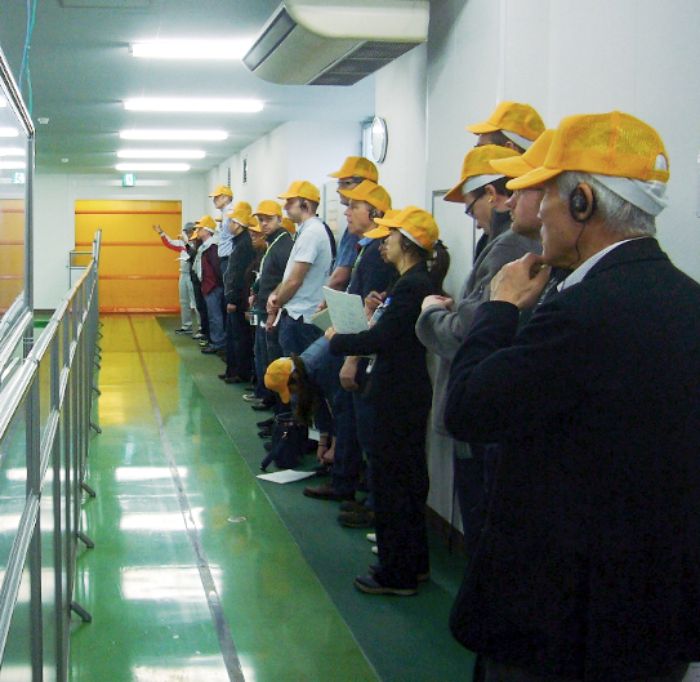
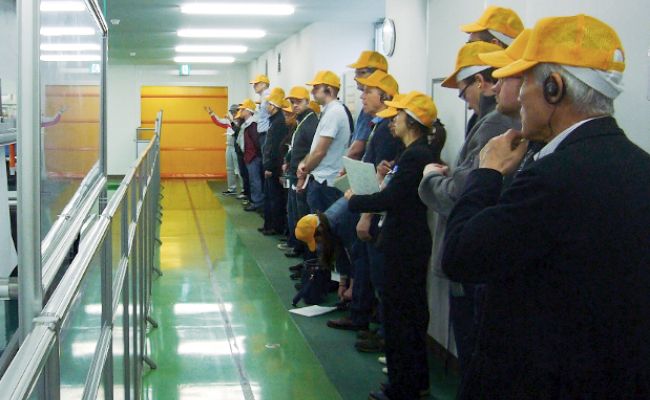
This training combines lectures on core problem-solving principles with interactive classroom exercises. To conclude the seminar, participants visit an actual office actively practicing Kaizen, gaining firsthand insight into real-world Kaizen initiatives.

Key
Learning
Points
  • Develop visualization skills to identify problems
  • Cultivate the ability to recognize Muda (waste)

KPO (Kaizen Promotion Office) Super Flow

The Kaizen Promotion Office (KPO) is typically a top-level function reporting directly to management, responsible for overseeing and driving Kaizen activities across all operational sites.
This training explores the strategic role of the KPO in promoting Kaizen initiatives that directly address management challenges—such as cost reduction and the pursuit of an ideal future state. Through on-site visits, participants also develop the ability to sharply identify issues and guide Kaizen with clarity and precision.

Key
Learning
Points
  • Learn how to plan and manage Autonomous Study Activity
  • Learn how to monitor and support Autonomous Study Activities
  • Understand methods for developing people through Kaizen leadership

Kaizen Study Mission

To embed Kaizen across the organization, it is essential to build a top-down structure—one in which senior leaders set a clear direction and all employees align toward shared goals.
This training offers a broad understanding of the manager’s role in sustaining and expanding Kaizen. Participants explore practical strategies for building a high-morale workplace and maintaining motivation over time. The program also includes a site visit to observe Kaizen in practice.

Key
Learning
Points
  • Understand the role of managers in promoting Kaizen
  • Learn how to implement Hoshin Kanri (Policy Management) and Daily Management
  • Experience workplace strategies that support sustained Kaizen